February 12, 2022
His name is Jacques, and he kind of died a long time ago. I say his name “is” Jacques, and it might well have been, but what I mean is that it could have been. I say he “kind of died” because he isn’t alive anymore but his work is, his effects are, his memory is and his gift continues to be. I say “a long time ago” and I mean that. 200 years, -ish.
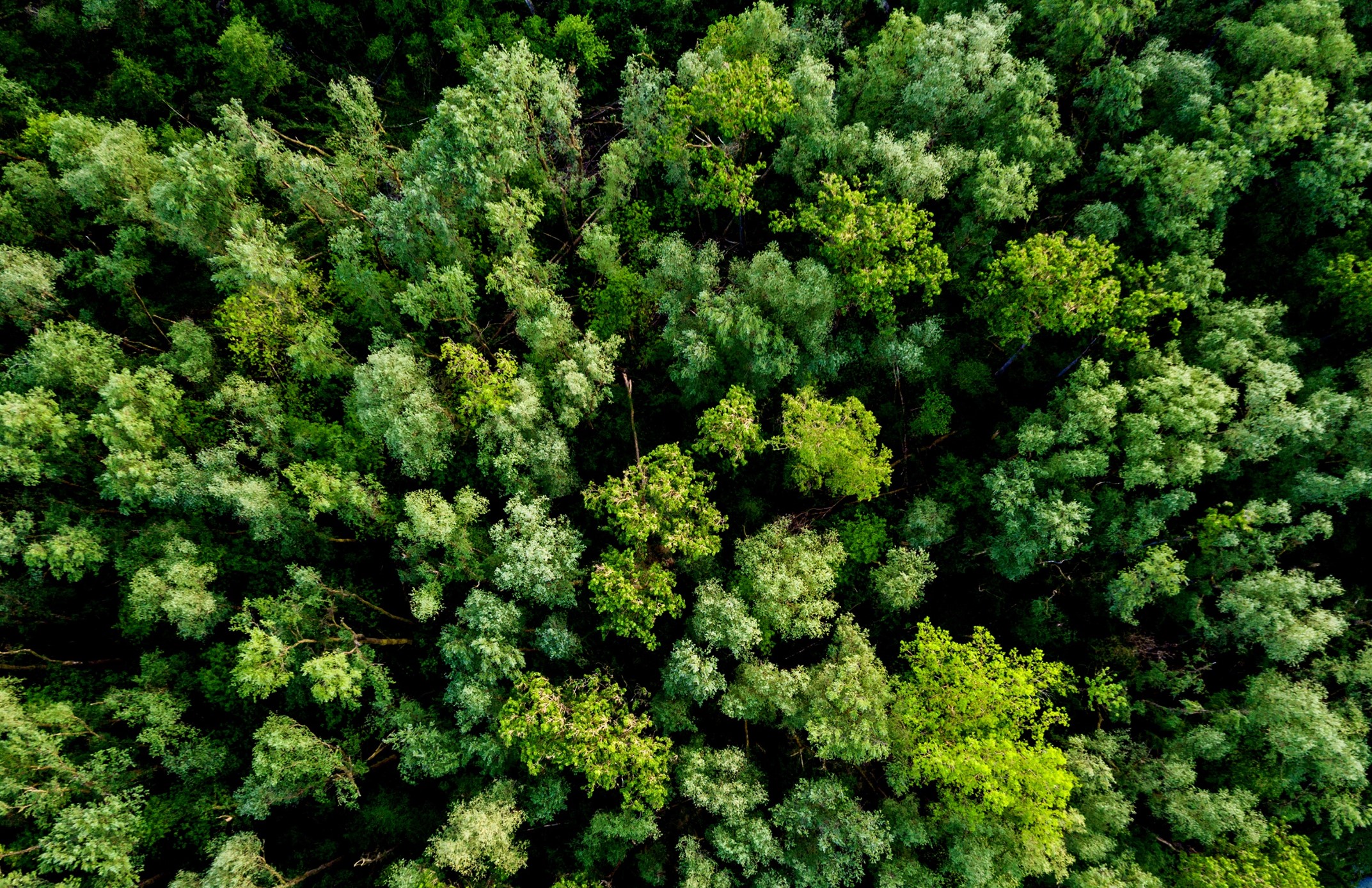
Jacques was a forest guard in Bellême, France. Its oak forest, the silva pertica, has been renowned, or at least admired, since the Roman period two thousand years ago, as evidenced by its Latin name. It’s in Normandie, the northwestern bit of France. In 1200 the forest there came under control of the French crown. It remained a “royal” forest until the French Revolution, when it became, eventually, a national park. As Forests in Europe, the central swath of Asia, and most of North America age naturally, they tend to end up in oaks, maples, ash, and beech. Those are the trees that are dominant at higher heights, so to speak. So by the time the forest has been around long enough to have tall oaks, the forest becomes pretty much tall oaks and will stay that way unless ruined. And Jacque’s work as a forest guard was to protect the forest from ruin, and perhaps to try to help it along, as well.
Jacques was born during the reign of Louis XVI, the man who would be made nine inches shorter courtesy of the guillotine. At the close of the 18th century, when Jacques had married and watched his children grow, he took on a second job as a forest guard. Everything depended on wood, and so the expression “wood means bread” was common in France. Want to eat food? You need firewood to cook. Want leather shoes? You need the tannins in trees to tan hides. Want to live in a house? Little wood. Want a ship with a mast? Tall wood. Wood went into everything. Unlike many of its neighboring countries, France had no coal deposits to exploit, so their industries depended on wood, too.
It was a ‘second’ job for Jacques because it didn’t pay very well, and it was dangerous. What’s more, the penalty for not doing your job well was harsh. Concern for bribery was high; if you let some dastardly businessman buy you off to cut the king’s tall oaks, he might not have ships for decades. Tavern owners were forbidden from being forest guards. They came into contact on a daily basis with all manner of questionable folk, after all. Barrel makers couldn’t be forest guards, for fear that they’d line their pockets with oak for staves.
Forest guards of Jacques’ day were required to have their own bow. They were permitted to shoot as many deer as they were able, and to keep the venison for their own use, but not to sell. They were either encouraged or commanded to shoot on sight any goat in the forest. “A troop of goats scattered in a forest does one hundred times more damage than the axe,” complained a French mayor in 1809. Such practices frequently put the forest guard at odds with his working-class neighbors, who depended on but could not legally access the forests and its goods, in favor of the elite who extracted what they wanted from the comfort of their chateaus miles away.
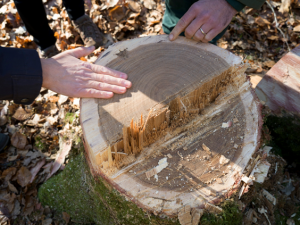
A 1669 law provided that patches of forest that were oak and elm (important species in shipbuilding) could only be cut in 100 year cycles. One of Jacques responsibilities was to replant in places where the canopy had opened up from such cutting. And that’s how it came to be that Jacques, toting his bow slung over his back, walked through the forest with a sack full of acorns. Making a grid-like pattern across the forest floor he stepped on a foot shovel to crack open the top soil, dropped in a nut, and removed the shovel to encase the would-be oak. And one of those trees was just felled, with much fanfare and joy, to be the final beam in the gorgeously repaired roof of Notre Dame Cathedral in Paris.
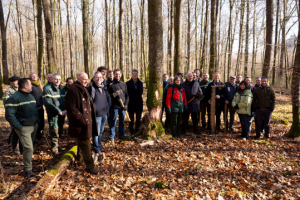
As you will remember, in April 2019 the world was shocked to see flames flying a hundred feet in the air above Notre Dame. Observers feared the worst. The great church managed to be saved, but for the roof and what was damaged by its collapse. To rebuild has been truly a global effort, with donations coming from across the world and skilled trades workers pitching in to contribute to this icon of architecture and the Christian faith.
But when something like this happens, you can’t just “rebuild.” You have to have been planning for it. You have to have been living and organizing your nation in such a way that you will have what you need to rebuild. You can’t just say, “Well, I guess we will need some massive 200 year oaks, so let’s plant some. You need Jacques. You needed to have Jacques. Or need to have had Jacques, whatever the right verb tense is. Fortunately, France had Jacques, a modest forest guard in 1825, whose work lives on in the glorious building of Notre Dame.
“I planted, Apollos watered, but God gave the growth,” Paul writes in 1 Corinthians. Each of us does what bits of good we can, whether planting a tree, loving our neighbor, or doing our job with compassion and an eye for what is right. Perhaps we will be like Jacques, and unwittingly contribute to a thing of great beauty, one acorn at a time.