Sermon for Third Sunday in Epiphany
Rev. Derek R. Nelson
First Lutheran Church, Attica, IN
January 23, 2022
Texts: Nehemiah 8:1-3, 5-6, 8-10; Ps 1 Cor 12:12-31a; Luke 4:14-21
In the Name of the Father, and of the Son, and of the Holy Spirit, AMEN.
I sometimes like to start sermons with weird questions. Here’s one. Are there trees? Like, is there an actual, real thing to which the words “a tree” refer. That’s not quite as obvious a question as you might think. I mean I love trees, that’s for sure. We certainly talk about trees. You can buy a tree from a nursery. So put that in the “yes, trees exist” column. I don’t think you can buy one on Amazon though. I entered “tree” into the product search bar, anyway, and all that came up in the first 500 or so hits were artificial ficus and olive trees. So if it doesn’t exist on Amazon, maybe put that in the “no, trees don’t exist column.”
I’m asking because I’ve been reading a lot about trees. Two books, both of which are short and easy, are In Search of the Mother Tree, by scientist Suzanne Simard, and The Hidden Life of Trees, by German forest ranger Peter Wohlleben. And a huge novel, that won the Pulitzer Prize for best novels of 2019, The Overstory by Richard Powers. If you think I’m being a fancy College Professor for talking about all these books, just know that Simard’s book was actually referenced by Coach Beard in the tv series Ted Lasso, so it’s not just for nerds.
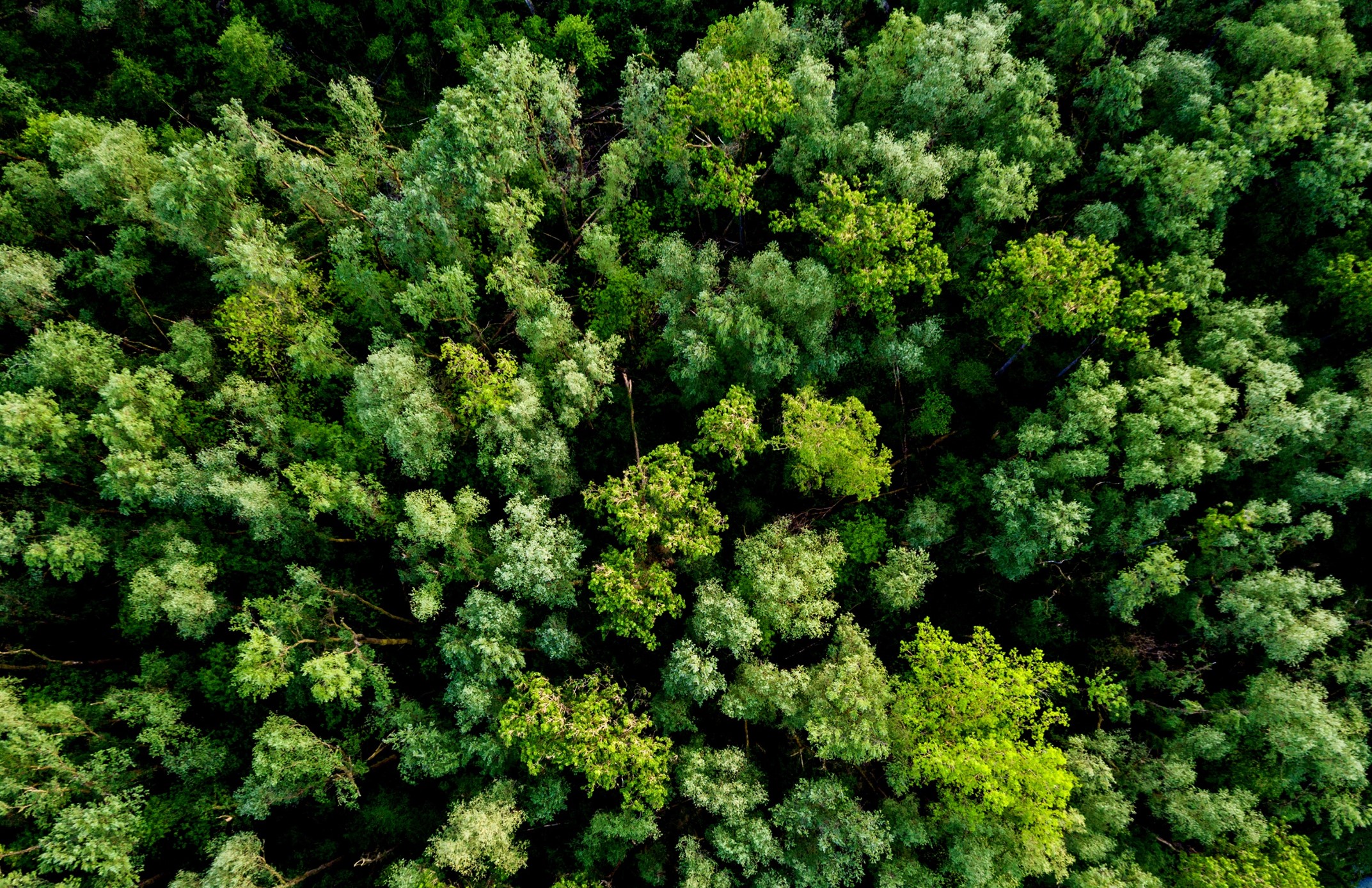
What these books say, as I understand them, is that FORESTS are real. Trees themselves, taken individually, have a kind of separate existence, sorta kinda. But forests are real. You can take a tree out of the forest if you’re very careful, dig up the root ball so that you get plenty of the root mass, and plant it somewhere else. And sometimes that will work okay. The tree can stay alive, can grow, and can sometimes, if the conditions are right, reproduce. Less than ten percent of transplanted trees survive, and about one in a hundred thrive well enough to reproduce. If you go to your nursery, you’ll have better odds than that, but that’s because all the ones that died before going on sale have been mulched up.
Why would this be? How could this be? This unwillingness of trees to be made into individuals… Pick me up and plop me somewhere else where I don’t know anyone, and I’d probably be lonely. But do trees get lonely? Really? I’m not a tree-hugger kind of a guy. More of a tree-handshake fellow. Pick me up and plop me down where no one else is living, and I’d be not just lonely, I’d be in danger. Where would I get food or shelter? But that shouldn’t be as big a deal for a tree, right? Their food is the sun, and their shelter simply decent soil, right?
But that’s where we’ve been wrong, and wrong for centuries. FORESTS are what are alive. Forests are real. They’re so alive that they’re able to give a moment’s breath, at least, to the individual specimens we call trees. But trees, long term, as such, in themselves, as individuals, don’t really exist.
Here are four things forests can do, that you might not think about if you’re just looking at a tree, which can do none of these.
First, forests communicate. They don’t talk about politics, as far as I know, and certainly not religion. But they do talk about the weather. Rainforests even talk about what they can do about the weather. They “thermoregulate.” Leaves at the top of the canopy curl up to let some of the warm air trapped below escape. But if they stay curled up too long, they’re letting too much sunlight in, and the cooling effect is negated. So their curling up and then unfurling down happens when they sense gas levels released by plants down on the ground. “I’m cold,” they say. “Okay, here’s some sun.” Amazing.
They gossip about yucky people moving into the neighborhood. Acacia leaves, I guess, are one of the favorite snacks of giraffes. But when an acacia tree senses its leaves being eaten, it releases ethylene gas, as if to say, “Gross – giraffes are here.” The gas blows downwind, and when other acacia leaves on other trees sense that, they release a flood of tannins and other bitter acids into their leaves, so that giraffes eat a few and say, “Yuck.” Now if you were a hungry giraffe, what would you do? Walk upwind, right? Well not so fast. The acacias also communicate upwind through an incredibly low voltage electrical signal sent through its roots. And by slow I mean about an inch in two or three minutes. But every little bit helps slow down your nosy neighbors.
Second, Forests share. There’s a four-dollar word for how they do it: mycorrhizomal networks. That’s the fungi connected with the roots. And there are gazilions of them. Pick up a big handful of forest soil, and in your two hands you hold more living organisms than there have been human beings in the history of the world, living and dead. Amazing. And this complicated network of tiny little hair-like follicles on a tree root is going back and forth and back and forth with all these tiny fungi. One of the things that’s going back and forth, is sugar. Simard has called the big tall trees in the middle of old-growth forests “mother trees.” They stand tall and absorb immense amounts of sunlight, turning it into glucose through photosynthesis. It can then dish out this sugar to trees of all species around it, using its mycorrhizomal network. It’s like a telephone tree for casserole distribution in a Lutheran church or something. Amazing. No one understood this until Simard because everyone assumed that trees compete for sunlight, but really it’s more like they share.
Third, forests protect. If you’ve ever walked under the Redwoods or Sequoias in the American West, you’ve probably felt both awe and a little fear. These things are so old. They’ve been standing tall since Jesus, since Moses, since Betty White, even. They’re so tall that they catch wind constantly. What’s to keep them from falling on me? How do they do it? You might think they’re anchored with a taproot going deep down into the soil. Nope. A 300 foot tall redwood, with a 20 foot diameter, so would fit in this church but not by a lot, has roots on average of how deep, would you guess? 6-12 feet, on average. But what they do, is they interlock. They hold hands below ground, and form a network, a wood wide web, you might say, that makes them all stronger than any would be alone.
Okay, I hope I’ve persuaded you that trees don’t really exist and that forests are cool. What’s that got to do with our lives, with God, with our lives in light of God?
So here’s a second awkward question. Do Christians exist? Or better, “Does a Christian exist?” Sure, in a sense. Here’s one standing before you, I hope. I’m looking at quite a few. But if you listen really closely to Paul, and think about your experience as a Christian, maybe you see another side. Maybe a Christian exists kind of like a tree “exists,” and the body of Christ is the real living specimen of faith. The Body of Christ is the forest, which is real, which breathes, defends, protects, talks and shares.
Paul writes in these familiar lines of “members” belonging to a “body.” That metaphor captures the truth really well. Does an ear exist? Does a foot exist? Well, Vincent van Gogh could show you his ear after it was, um, separated from his head. But not for very long. We know what happens when a member is cut off from the body that gives it life. It withers. And the body is no other thing than the collection of the members. There’s no magical “body” that is apart from hands, feet, skin, spleen, ears and nose.
It’s not just American individualism that makes us miserable and lonely. Although we maybe have it worse they way we live. We can afford cars, we have plenty of land, we move around for jobs in ways other cultures don’t, so we can live pretty far removed from communities in ways other people don’t. In that sense we’re victims of our own prosperity. But this loneliness, rootlessness and despair is getting worse all over the world. We’ve succumbed to the illusion that a tree can be fine on its own.
There’s this old proverb, “Behind every great man is a great woman.” I actually like Tina Fey’s gloss on that — “Behind every great man is a great woman rolling her eyes.” But it is very nearly impossible to sort out any great accomplishment you’re proud of that you’ve done alone. Your parents reared you, you spouse supported you, your friends or colleagues challenged you. No one is an island.
This line of thinking, which I admit is as old as the hills and as oft-repeated as a cliche, is usually in a sort of scolding register. “Stop trying to take credit for things.” “Why do you think you’re so important?’ But I mean it differently. I mean it as good news, something which might come as a relief. And while Paul can be certainly be a scold, I think that’s his point, too. He will show us a “still more excellent way” than the tongue thinking it doesn’t need the ear, or the foot thinking it’s got nothing to do with a nose. When he says, “Now you are the body of Christ and individually members of it.” he means some will teach, some will preach, some will heal. No one will do it all. You don’t have to do it all. In fact, don’t try to do it all. Rely on your network. Contribute to your network.
When we think of God’s relation to humanity we tend to think of trees. God sees me, God loves me, God judges me. That might be true in a limited way. But God is a gardener in Genesis. The Bible begins in a garden and ends in a city, but it’s trees at both ends and all the way through. When you get to Revelation you see the Tree of Life, whose leaves are for the healing of the nations. I think the God who goes with us sees humanity like a forest. Sure there are trees but hidden below the ground are connections, and blowing in the wind there are connections, and stitching together the species there are connections and all that there are, really, are connected things.
You are the Body of Christ. Because of the Body of Christ, you ARE. In the One Spirit we are all baptized into one body.
Thanks be to God. AMEN.